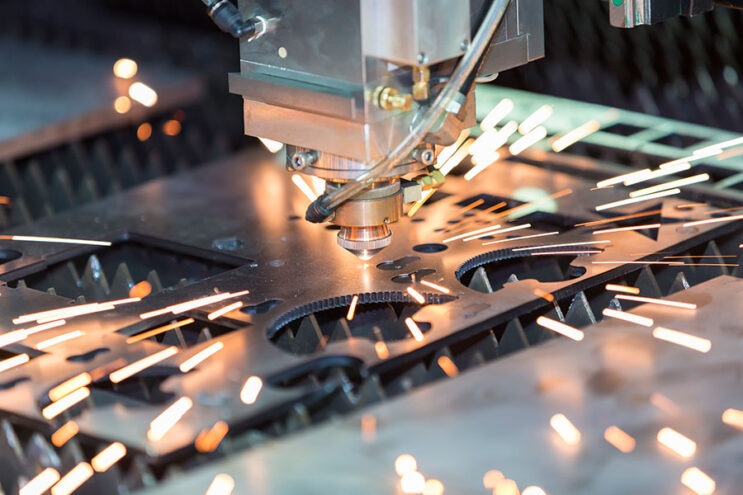
Sheet Metal Fabrication Services.
Fast and cost-effective sheet metal fabrication from 3D CAD files with laser cutting, bending, welding, and finishing services.
Laser Cutting
Precision laser cutting for complex geometries with no tooling required.
Bending & Forming
CNC press brake bending for precise angles and complex bend sequences.
Welding Services
TIG, MIG, and spot welding for assemblies and weldments.
Finishing Services
Complete finishing including powder coating, anodizing, and plating.
What Is Sheet Metal Fabrication?
Sheet metal fabrication is a subtractive manufacturing process that forms parts from thin metal sheets. Engineers often choose sheet metal parts for their high precision and durability, especially for end-use applications like chassis, enclosures, and brackets.
Xofah's online sheet metal fabrication services provide a fast and cost-effective solution for any parts that need to be made from 3D CAD files or engineering drawings. Xofah offers a range of sheet metal materials, including aluminum, copper, steel, and stainless steel, as well as assembly services like installing PEM inserts, welding, and finishing services.
With a network of domestic and overseas fabricators, Xofah can supply any quantity of sheet metal parts from low-volume, high-mix prototypes to high-volume production runs.
Fast Turnaround
Parts in as fast as 3 business days
Cost-Effective
No tooling costs for prototypes
Multiple Materials
Aluminum, steel, stainless, copper
Quality Certified
ISO 9001 certified fabricators
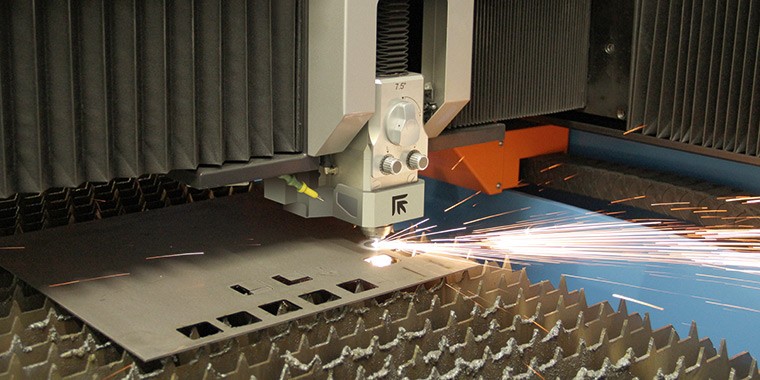
Operational Logic
Sheet Metal Forming Process
Sheet stock is procured in a flat state and cut then formed into its final state through a series of progressive steps.
Cutting/Blanking
For a typical sheet metal project, the first step is equivalent to sheet cutting, where a shear, laser, waterjet, plasma, or punch press is used to create the internal holes and edge features of the part. This process is also known as blanking.
Forming/Bending
Once the blank is produced, the next step is to form sheet metal using various tools, but most commonly some sort of brake. A brake press can be manual or automated and uses die inserts to create a desired angular bend, forming the two-dimensional sheet into a three-dimensional object.
Joining/Assembly
Sheet metal parts can be joined through welding, riveting, or hardware installation to create complete assemblies.
Sheet Metal Fabrication Capabilities
| Feature | Description |
|---|---|
| Blank Size | 5' x 10' (1.52 m x 3.05 m). We accommodate larger part volumes upon request. |
| Standard Lead Time | 3 business days |
| Sheet Thickness | 0.024" - 0.250" typical. We accommodate thicker or thinner gauges upon request. |
| General Tolerances | ±0.005" for bend angles, ±0.010" for hole locations |
| Braking (Hydraulic) | 14′ length |
| Braking (Magnetic) | 6 tons of magnetic pull across the entire beam, 5/8" minimum reverse bend |
| Punching | 2" diameter hole capacity, or larger upon request |
| Welding | Welded edges and seams, weldments, and assemblies |
How Xofah Sheet Metal Fabrication Works
Xofah's custom sheet metal fabrication services utilize the top sheet metal fabricators in the US and globally. Sheet metal fabricators first convert CAD and drawing data into machine code. A laser cutting, waterjet, or plasma cutting machine will then precisely remove sheet metal material.
The raw material is formed into angular bends and features using brakes, punches, and dies. If any assembly or post-processing is required, our sheet metal manufacturers will weld, add inserts, or finish the part.
The efficiency and high precision of sheet metal fabrication, coupled with Xofah's variety of materials, range of sheet metal fabricators, and post-processing options means you can get parts for any application.
Aerospace and defense components
Automotive parts and assemblies
Energy and industrial equipment
Medical and dental equipment
Consumer products and electronics
Sheet Metal Materials
Aluminum
Copper
Bronze
Stainless Steel
Steel
Nickel Alloys
Titanium
Available Sheet Metal Finishes
Standard
Minimal post-processing or treatment on parts is done.
Bead Blast
The part surface is left with a smooth, matte appearance.
Anodize (Type II Or Type III)
Type II creates a corrosion-resistant finish. Type III is thicker and creates a wear-resistant layer.
Chem Film
Provides corrosion resistance and good conductivity properties. Conforms to MIL-DTL-5541.
Powder Coat
Strong, wear- and corrosion-resistant layer more durable than standard painting methods.
Electroless Nickel Plating
Uniform nickel coating which offers protection from corrosion, oxidation, and wear.
Gold Plating
Good corrosion and tarnish resistance with excellent solderability.
Silver Plating
High solderability and electrical conductivity.
Sheet Metal Design Guidelines
Bend Radius
Minimum inside bend radius should be 1x material thickness
Hole Placement
Holes should be at least 2x material thickness from bend lines
Uniform Thickness
Design with uniform material thickness for best results
Bend Direction
Bends perpendicular to grain direction are stronger
| Feature | Description (MT = Material Thickness) |
|---|---|
| Minimum Bend | 1X MT |
| Minimum Hole to Edge Distance | 2X MT |
| Minimum Hole to Hole Distance | 6X MT |
| Minimum Bend Edge to Hole Distance | 6X MT |
| Minimum Feature to Countersink Distance | 8X MT |
| Minimum Countersink Depth | 0.6X MT |
| Relief Cuts | 1X MT |
| Corner Fillets | 0.5X MT |
Applications
Advantages of Sheet Metal Fabrication
No Tooling Required
Laser cutting eliminates tooling costs for prototypes and low volumes
Fast Turnaround
Parts in as fast as 3 business days with no tooling lead time
Design Flexibility
Easy to modify designs without tooling changes
High Precision
CNC equipment ensures tight tolerances and repeatability
Scalability
From single prototypes to production runs
Material Variety
Wide range of metals and thicknesses available
Ready to Start Your Sheet Metal Fabrication Project?
Upload your CAD files for instant pricing and DFM feedback.