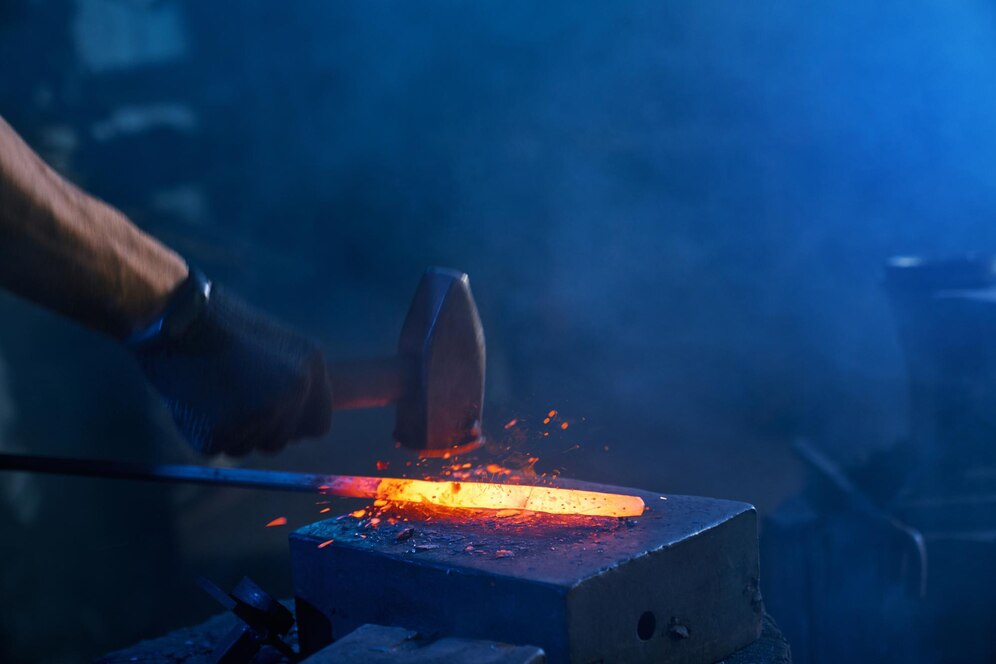
Forging Services.
The forging manufacturing process utilizes metal that is hammered, pressed, or rolled under intense, localized pressure. The parts are shaped into high-strength components known as forgings.
Open-Die Forging
Versatile forging between flat dies for large parts up to 150 tons and 25 meters in length.
Closed-Die Forging
Precision forging with dies containing impressions for complex shapes and closer tolerances.
Hot & Cold Forging
Temperature-controlled forging processes for optimal material properties and part characteristics.
Rolled Ring Forging
Specialized process for creating seamless rings from less than 1 meter to over 10 meters in diameter.
Forged Parts Benefits
Forged parts are stronger than the parts manufactured through other processes and are often used in applications where strength, reliability, and safety are critical. Xofah has extensive experience in forging high-quality, highly specialized rings for wind turbine towers and other industrial applications.
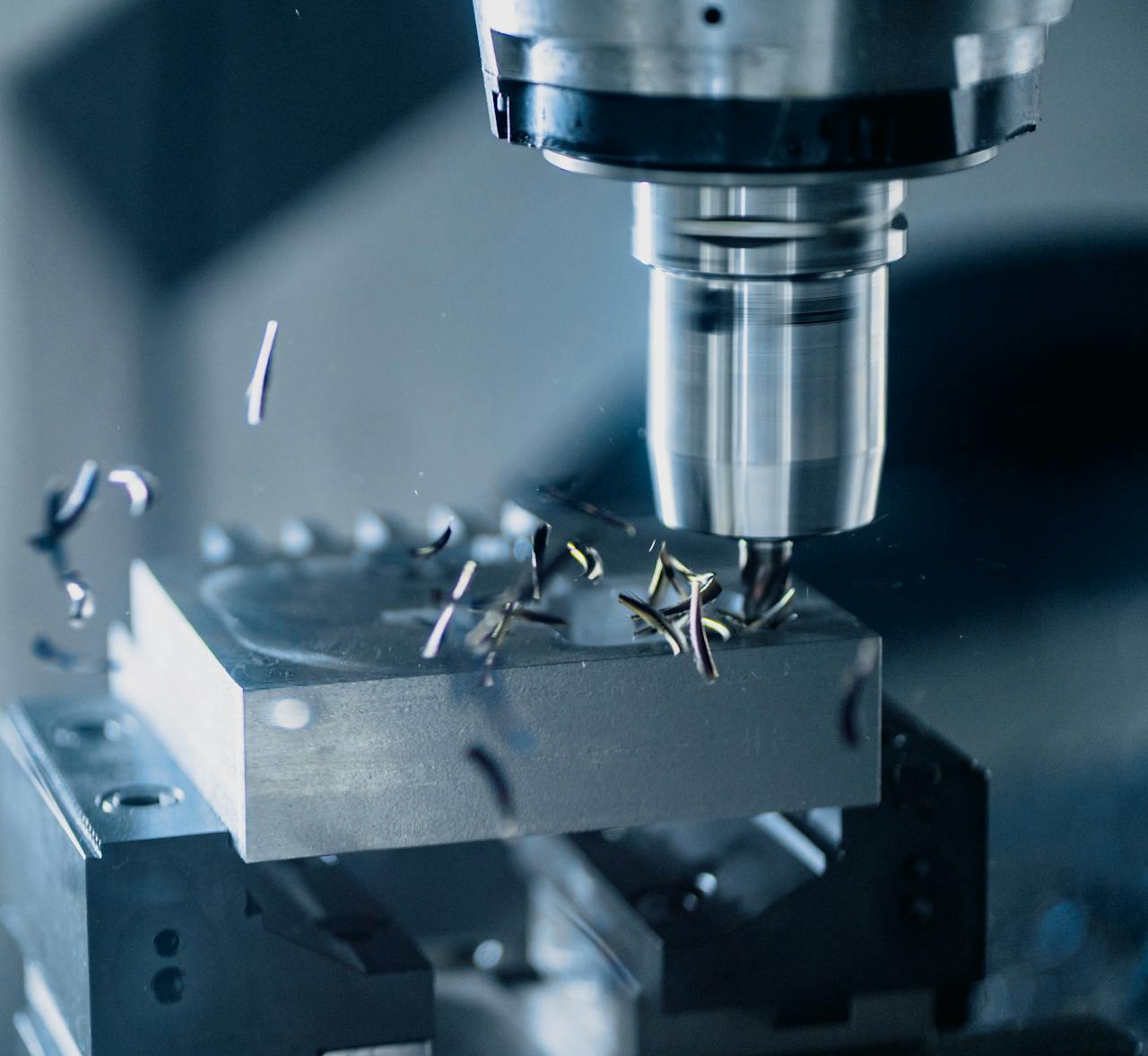
Our commitment to precision and customer satisfaction allows us to deliver high-quality, well-priced products on schedule. Once forged, components can be post-processed by precision CNC machining and surface finishing.
Superior Strength
Forged parts exhibit superior mechanical properties compared to cast or machined parts
Rapid Production
Quick design and production capabilities with industry-leading software
Quality Certified
AS 9100D & ISO 9001:2015 certified with global quality expertise
Global Facilities
Worldwide manufacturing plants for rapid prototyping and production
Operational Logic
Up to 150 Tons
Up to 25 Meters
Up to 1,260°C
+/- 0.010" to 0.020"
Material
Matrix.
Steel & Iron
Non-Ferrous
Exotics
Open-Die Forging
Xofah performs open-die forging between flat dies with no pre-cut profiles in the dies. This method involves moving the workpiece in order to shape it. This can be done with large parts that weigh over 150 tons and up to 25 meters in length.
Forging can be done with various types of alloys, including ferrous, non-ferrous, and some exotics like age-hardening superalloys and corrosion-resistant refractory alloys. The shapes that can be created are limited only by the creativity of the manufacturing engineer.
A benefit of this method is the ability to create prototypes in single-piece or low volume. Open-die forgings impart similar grain flow orientation, deformation, and other beneficial characteristics when compared to closed-die forgings.
Applications
Hardware tools, automotive components including crankshafts, drive shafts, transmission shafts and gears
Advantages
No tooling costs, flexible production, prototype capability, large part capability
Materials
Ferrous, non-ferrous, age-hardening superalloys, corrosion-resistant refractory alloys
Closed-Die Forging
Closed die forging is a process that uses two or more dies containing impressions of the desired shape. The forging stock is placed between the dies and undergoes plastic deformation, which results in a more complex shape with closer tolerances.
This process can be used to forge most engineering metals and alloys, including carbon and alloy steels, tool steels, stainless steel, aluminum, copper alloys, and certain titanium alloys.
Precision
Achieves closer tolerances and more complex geometries than open-die forging
Repeatability
Excellent for high-volume production with consistent quality
Material Efficiency
Minimal material waste compared to machining processes
Hot and Cold Forging
Forging can be hot (up to 1,260°C) or cold. Cold forging includes processes like bending, drawing, heading, coining, and extruding, which can create many different shapes. However, it requires stronger equipment and may need extra annealing steps.
Despite some drawbacks, cold forging is generally superior to hot forging in terms of dimensional control, product uniformity, surface finish, and contamination. However, it is not suitable for metals that are very strong, such as steel with high carbon content.
For cost-effectiveness, cold forging is typically only used for parts that weigh 5 kg or less. Automated processing is possible for symmetrical parts that weigh up to 3 kg.
Hot Forging Materials
High-carbon steels, large components, complex shapes
Cold Forging Materials
Lower-alloy and carbon steels, aluminum, brass, bronze alloys
| Process | Temperature | Advantages | Best For |
|---|---|---|---|
| Hot Forging | Up to 1,260°C | Easier deformation, larger parts, complex shapes | Large parts, high-strength materials, complex geometries |
| Cold Forging | Room temperature | Better dimensional control, superior surface finish, no contamination | Small parts (≤5kg), high precision, lower-alloy materials |
Rolled Ring Forging
Rolled ring forging is a process where a thick, round piece of metal is punched to create a donut shape, which is then rolled or pounded into a thin ring. Ring diameters can start from less than one meter to over 10 meters.
This process is ideal for creating seamless rings with superior mechanical properties. The continuous grain flow in rolled rings provides exceptional strength and reliability.
Size Range
Diameters from <1 meter to >10 meters
Applications
Wind turbine towers, bearings, flanges, gears, pressure vessels
Advantages
Seamless construction, superior strength, grain flow optimization
Vetted Standards.
Get a Quote for Forged Components
Xofah is your immediate and reliable solution for complete end-to-end manufacturing and supply chain services.