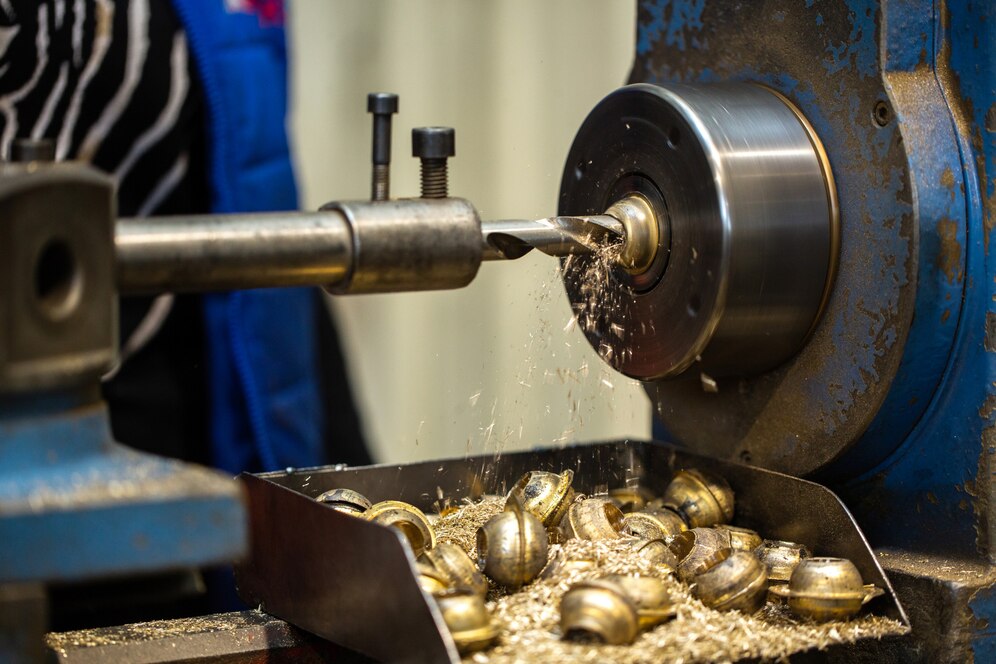
Die Casting Services.
Xofah provides high-quality die cast metal parts using aluminum, zinc, copper, brass, and bronze alloys with precision and efficiency.
Hot Chamber Die Casting
Ideal for lower melting point alloys like zinc, magnesium, and lead with fast cycle times.
Cold Chamber Die Casting
Perfect for higher melting point materials like aluminum with excellent strength properties.
Aluminum Die Casting
Lightweight, corrosion-resistant parts with excellent strength-to-weight ratios.
Zinc Die Casting
Easiest to cast material with excellent fluidity and fastest production rates.
Custom Die Casting Services
Die casting is the manufacturing process of choice when producing high volumes of relatively complex metal parts and is widely used due to its versatility, reliability, and accuracy. Die casting eliminates all or most secondary operations needed to make a metal part; however, post-machining is common to meet tighter critical-to-function tolerances.
Like injection molding, die casting requires the fabrication of a mold tool—called a die—that can have one or multiple cavities. The process works for softer alloys, including aluminum and zinc alloys, due to their relatively lower melting temperature.
Our project managers and experts personally review and manually quote each die casting project to ensure we meet your unique needs while providing a fast and easy manufacturing experience.
Fast Production
High-speed production with excellent repeatability
Tight Tolerances
Achieve tolerances of +/-0.003" to 0.005" per inch
Quality Certified
ISO 9001:2015, AS9100D certified facilities
Complex Geometries
Produce intricate shapes with thin walls
Operational Logic
+/- 0.005" (0.127mm)
+/- 0.002" (0.05mm)
Up to 50 lbs (22kg)
Up to 75 lbs (34kg)
Material
Matrix.
Aluminum Alloys
Zinc Alloys
Magnesium Alloys
Die Casting Process
Die casting works by injecting molten metal into a die cavity, which takes the shape of the part and hardens into place before removal. Depending on the project scope, die casting can be low- or high-pressure, using a ladle or plunger to deposit metal.
Die casting can produce highly complex, tight-tolerance parts in a repeatable manner at very high production volumes. Modern die casting methods such as squeeze casting and semi-solid metal casting produce high-quality parts for nearly every industry.

Hot Chamber Die Casting
Also known as gooseneck casting, the hot chamber die casting process is the most popular die casting process. It is optimal for working with lower melting point alloys such as zinc, magnesium, and lead.
A holding pot is filled with metal and heated until molten by an attached or built-in furnace. A feature of the hot chamber system referred to as the gooseneck forms a holding chamber within the pot and a nozzle-like pathway that connects to the injection cavity of the fixed half of the die.
Cold Chamber Die Casting
With the cold chamber die casting process, the chamber remains at room temperature and does not have a holding pot of molten metal. Metal is melted in a separate furnace and deposited into the shot chamber through a pouring hole by hand with a ladle.
In cold chamber die casting, the mold is connected directly to the shot chamber and does not utilize a plunger system. Instead, a ram forces molten metal into the mold and held under high pressure while the metal solidifies.
Die Cast Materials
Several different metal materials are available to choose from when manufacturing using die casting. The material you choose will depend on your intended use for the product.
Aluminum Die Casting
Aluminum alloys are the most widely used for die cast parts. Aluminum die casting suppliers benefit from the total recyclability of the material and its ease of use. Due to the comparatively higher melting point, aluminum die casting may require a cold chamber casting process.
Engineers use cast aluminum parts primarily for their great strength to weight ratios, dimensional stability, and diverse finishing options.
Zinc Die Casting
Zinc is the easiest to cast material among the die casting metals and is typically used in hot chamber processes. Molten zinc has exceptional casting fluidity and a lower melting point. Its strength and stiffness allow it to produce parts with thinner walls and highly detailed features.
The low melting point of die casting zinc alloys means the die casted parts cool off and solidify more quickly, which results in the fastest production rates of the die casting materials.
Available Die Casting Finishes
Various finishes are available to enhance the appearance and performance of die cast parts.
Standard (As-Cast)
Zinc and aluminum parts can be left as-cast. Surface finish for as-cast zinc alloys is commonly 16-64 microinch Ra.
Bead Blasted
The part surface is left with a smooth, matte appearance.
Anodized (Type II or Type III)
Type II creates corrosion-resistant finish. Type III is thicker and creates wear-resistant layer.
Powder Coating
Strong, wear- and corrosion-resistant layer more durable than standard painting methods.
Wet Painting
Wide variety of paint formulations and colors available.
Plating
Electroless nickel, nickel, brass, tin, chrome, chromate, Teflon, silver and gold plating available.
Chemical Film
Chromate conversion coat to protect aluminum from corrosion and improve paint adhesion.
Media Tumbled
Vibratory media tumbling to remove sharp edges and smooth surfaces.
Applications of Die Casting
The versatility and high production potential of die casting enable it for various applications and industries. Die casting products that are small to medium in size with complex features are typically well suited for the process.
Aerospace & Automotive Components
Engine parts, transmission components, structural elements
Connector Housings
Electrical connectors, junction boxes, terminal blocks
Pumps and Plumbing Fixtures
Pump housings, valve bodies, fittings
Outdoor Lighting
Light fixtures, housings, heat sinks
Gears
Precision gears for various applications
Appliances and Lighting
Consumer appliance components, lighting fixtures
Die Casting Advantages and Considerations
Complex Geometry
Die casting can reliably produce custom parts with thin walls and challenging geometry that is durable and dimensionally stable.
Strength
Metal die castings are typically stronger than plastic injection molded parts and more resistant to high temperatures.
Precision
Die casting offers typical tolerances ranging from +/-0.003" – 0.005" per inch but can go as tight as +/- .001".
Custom Finishes
Metal finishers can produce cast parts with smooth or textured surfaces, paints, and plating finishes.
Vetted Standards.
Ready to Start Your Die Casting Project?
Get expert consultation and competitive pricing for your custom die cast parts.